
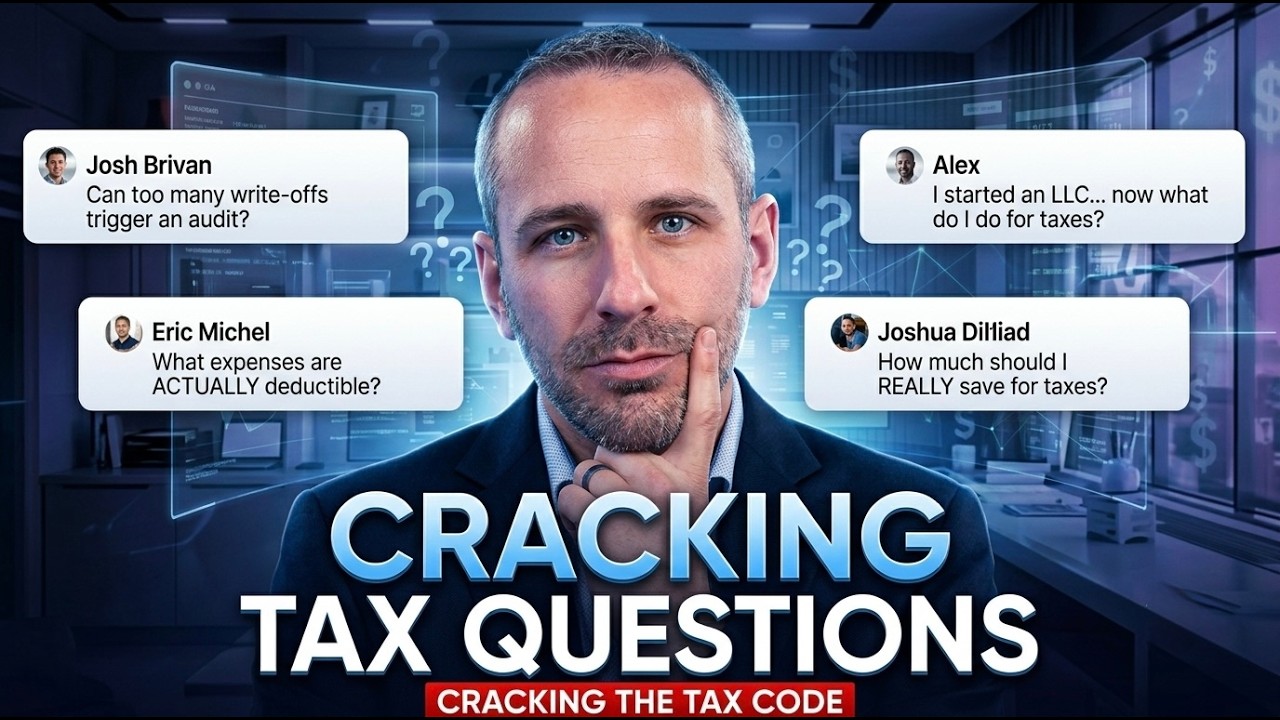
Can you deduct your dog if she appears in your business advertising? Can your kitchen table qualify as a home office? Do you need to report a Venmo payment when you never received a 1099?
Small business tax questions often sound simple, but the correct answer depends on details such as your business entity, how an expense was used, how a worker is classified, and what documentation you maintained.
This guide answers several common questions about small business tax deductions, hiring your children, business mileage, missing receipts, retirement contributions, and health-sharing plans.
TL;DR
- Some expenses related to using your dog in business marketing may be deductible, but ordinary pet expenses are generally personal.
- A kitchen table used for both work and family meals usually fails the exclusive-use requirement for the home office deduction.
- Business income must be reported even when you don’t receive a Form 1099.
- The tax treatment of hiring your child depends partly on whether your business is a sole proprietorship, partnership, or corporation.
- Expenses under $75 may not always require a receipt, but you still need records showing the amount, date, and business purpose.
- You need a mileage log whether you use the standard mileage rate or actual expense method.
- Health-sharing payments generally don’t qualify for the self-employed health insurance deduction in the same way traditional insurance premiums do.
- A valid tax strategy requires a legitimate business purpose, reasonable amounts, correct entity treatment, and clear documentation.
Answers to Common Small Business Tax Questions
The tax code generally allows a business to deduct expenses that are ordinary and necessary for operating that business. However, an expense doesn’t become deductible simply because it appears somewhere in your business.
You must be able to show how the expense relates to your work. You also need to separate its business use from any personal benefit.
The same principle applies throughout this Q&A. Whether you’re paying your child, driving to a client, using part of your home, or accepting payments through Venmo, the underlying activity and documentation matter more than the label you give it.
Can You Deduct Your Dog as a Business Expense?
If your dog appears in social media content, advertising campaigns, or promotional materials, certain expenses directly connected to that marketing may qualify as small business tax deductions.
Potentially deductible expenses could include:
- Professional photographs or videos created for business marketing
- Advertising campaigns featuring the dog
- Entry fees for events attended specifically to promote the business
- A branded harness, costume, or other promotional item
- Production costs for business content featuring the dog
These expenses have a direct connection to advertising the business. They are different from the costs you would incur simply because you own a pet.
Food, routine veterinary care, medication, boarding, grooming, and pet insurance generally remain personal expenses when the dog is also a family pet. Featuring your dog in occasional marketing content does not automatically convert every pet-related cost into a business deduction.
The analysis may be different when an animal is acquired, trained, and maintained exclusively to perform a business function. A working animal used solely for security, specialized training, or another legitimate business purpose has a much stronger connection to the business.
The main question is whether the expense was ordinary and necessary for operating your business, rather than a personal expense you would have paid regardless.
How Should You Track Mileage for Business Travel?
If you drive to clients’ homes, transport animals, pick up supplies, or travel between business locations, the related mileage may qualify for a deduction.
You generally have two methods to consider:
- Standard mileage method: You multiply your qualifying business miles by the applicable IRS mileage rate.
- Actual expense method: You calculate the business portion of expenses such as fuel, repairs, insurance, registration, and depreciation.
Both methods require records of your business and personal mileage. Your mileage log should include:
- The date of each trip
- Your starting point and destination
- The number of miles driven
- The business purpose of the trip
You can use an app, spreadsheet, or written mileage log. The specific tool matters less than maintaining complete and consistent records.
Your home office can also affect how mileage is treated. If your home qualifies as your principal place of business, travel from that office to another business location may qualify as business mileage instead of nondeductible commuting. The home office must first meet the applicable requirements.
Can You Deduct an Expense Without a Receipt?
Losing a receipt doesn’t automatically mean you lose the deduction, but a bank or credit card statement alone may not prove the complete business purpose of an expense.
Under IRS substantiation rules, receipts generally aren’t required for certain travel, transportation, or gift expenses under $75. Lodging is an exception and generally requires a receipt regardless of the amount. You must still maintain records showing the amount, date, location, and business purpose.
For a client meal, document:
- The date and amount
- The restaurant or location
- Who attended
- The business relationship
- The business purpose or topic discussed
Business meals are generally subject to a 50% deduction limit when the applicable requirements are met. The expense cannot be lavish or extravagant under the circumstances, and the taxpayer or an employee must generally be present.
Keeping receipts remains the safest practice, even when one may not be strictly required. A statement can prove that money changed hands, but it may not establish what was purchased or why it was a business expense.
What If You Paid a Business Expense Personally?
If you own an S corporation and pay a business expense with a personal card, the corporation should generally reimburse you through an accountable plan.
Under an accountable plan, the expense must:
- Have a legitimate business connection
- Be properly substantiated within a reasonable period
- Include the return of any excess reimbursement
When these requirements are satisfied, the reimbursement generally isn’t treated as taxable wages to the employee. The corporation can then record the underlying business expense appropriately.
Sole proprietors handle personally paid expenses differently because the owner and business aren’t separate federal taxpayers in the same way an S corporation and its shareholder are. Regardless of the entity, separate business banking and credit cards can make recordkeeping considerably easier.
Can You Pay Your Child Without Federal Income Tax?
Hiring your child can shift income from your business to a family member who may be in a lower tax bracket. However, you must treat the arrangement as legitimate employment.
For 2026, the standard deduction for a single filer is generally $16,100, according to IRS Publication 505. A child whose income falls below that amount may owe no federal income tax if they have no other income or circumstances that change the calculation.
That doesn’t automatically make every payment “tax-free.” Payroll taxes, self-employment taxes, state taxes, and filing requirements may still apply.
How the Business Entity Changes the Result
If your child works for a sole proprietorship owned by a parent, wages paid before age 18 are generally not subject to Social Security and Medicare taxes. This treatment may also apply to a partnership when each partner is a parent of the child.
The exception doesn’t generally apply when the business operates as a corporation, including an S corporation. Wages paid by an S corporation are ordinarily subject to Social Security and Medicare taxes regardless of whether the shareholder’s child is under 18.
The IRS rules for family employees explain how employment taxes differ based on the child’s age and the employer’s business structure.
Example: Paying Your Child $15,000
Assume your child earns $15,000 for legitimate work during 2026 and has no other income.
Because the earnings are below the $16,100 standard deduction, the child may owe no federal income tax. If the child is under 18 and employed by a parent’s sole proprietorship, the wages may also be exempt from Social Security and Medicare taxes.
If the same $15,000 is paid by an S corporation, payroll taxes generally apply. The business must run payroll, issue a W-2, and handle the required employment tax filings.
The child must also perform real work, receive reasonable compensation, and maintain records such as job descriptions, timesheets, and payment history.
Should Your Child Receive a W-2 or a 1099?
Worker classification depends on the actual working relationship, not the owner’s preferred tax result.
A child who works regular hours, follows the business owner’s instructions, and performs ongoing duties is likely an employee. That generally means completing a Form W-4, running payroll, and issuing a Form W-2.
An adult child who independently provides project-based services to multiple clients may potentially qualify as an independent contractor. However, paying someone through a Form 1099 doesn’t automatically make that person self-employed.
The IRS considers behavioral control, financial control, and the relationship between the parties when determining whether a worker is an employee or independent contractor.
Misclassifying an employee as a contractor can create unpaid payroll taxes, penalties, interest, and additional filing obligations.
Can Hiring Your Child Help Pay for College?
If college is only a year away, there may be limited time for contributions to a 529 plan to grow. Hiring your child through the business may provide another way to help fund education costs.
The business receives a deduction for reasonable compensation paid for legitimate work. Your child receives earned income that can be used toward tuition and living expenses.
The arrangement must still satisfy the same requirements as any other employment relationship:
- The child must perform necessary business work.
- Compensation must be reasonable for the services performed.
- Payroll and worker-classification rules must be followed.
- Payments and hours should be documented.
- The business should pay the child directly.
Depending on the child’s age and the nature of the work, earned income may also create eligibility to contribute to a Roth IRA. However, money placed in a retirement account should generally be viewed as long-term savings rather than money intended for immediate college expenses.
Can Your Kitchen Table Qualify as a Home Office?
Usually not if your family also uses the table for meals or other personal activities.
The home office deduction generally requires a portion of the home to be used regularly and exclusively for business. According to the IRS guidance on business use of the home, you generally cannot deduct a space used for both personal and business purposes when the exclusive-use requirement applies.
The office doesn’t have to be an entire room. A clearly defined portion of a room may qualify if it is used only for business.
For example, a dedicated desk and work area in the corner of a studio apartment may potentially qualify. A kitchen table used for client work during the day and family dinner at night generally does not.
Do You Have to Report Venmo Income Without a 1099?
Yes. Business income remains taxable even when you don’t receive a Form 1099.
The form is an information-reporting document. It doesn’t determine whether the underlying payment is taxable. If a customer pays your business $900 through Venmo for goods or services, you must generally include that payment in your business income.
It is also important to distinguish between different types of 1099 forms. The $2,000 reporting threshold discussed for certain 2026 Forms 1099-NEC and 1099-MISC is not the same as the Form 1099-K threshold used by payment platforms.
For 2026, third-party settlement organizations generally aren’t required to issue Form 1099-K unless reportable payments exceed $20,000 and 200 transactions. However, these reporting thresholds never create a tax-free amount. Income must still be reported whether or not Venmo sends you a form.
Personal transfers, gifts, and reimbursements are generally different from payments received for goods or services. Keep clear records so you can identify which transactions represent business income.
Can Health-Sharing Payments Be Deducted?
Health-sharing arrangements are generally not treated as traditional health insurance. As a result, payments to these plans typically don’t qualify for the self-employed health insurance deduction in the same way ordinary insurance premiums do.
The details can depend on the specific arrangement and current tax guidance. Before claiming a deduction, confirm how the plan is structured and whether it qualifies with the plan provider and your tax professional.
A health-sharing plan may still cost considerably less than traditional insurance. When comparing your options, consider both:
- The difference in annual plan costs
- The tax savings you may lose by not qualifying for the self-employed health insurance deduction
A tax deduction shouldn’t be evaluated in isolation. A less expensive plan may still produce a better overall financial result, even when the payments aren’t deductible.
Can You Still Make Retirement Contributions for Last Year?
Certain employer retirement contributions may be made after the end of the tax year, particularly when a business has filed an extension. The applicable deadline depends on the type of plan, the contribution, the business entity, and when the plan was established.
The episode highlights several 2026 planning deadlines:
- Certain 2025 employer profit-sharing contributions may be made by the extended return filing deadline.
- High-income business owners considering a defined benefit plan should review the applicable establishment and funding deadlines.
- Businesses planning to establish a safe harbor 401(k) for 2026 should begin early because setup may take 45 to 60 days.
Retirement plan rules are highly specific. Confirm the deadline with your plan administrator before assuming a contribution can be made retroactively.
The Documentation Every Tax Strategy Needs
The strongest small business tax deductions share four characteristics:
- Legitimate business purpose: The expense or payment must have a real connection to your business.
- Reasonable amount: Compensation and expenses should reflect the value received by the business.
- Correct entity treatment: A sole proprietorship, partnership, S corporation, and C corporation may follow different procedures.
- Clear documentation: Records should establish what happened, when it happened, how much was paid, and why it was business-related.
A marketing dog doesn’t make every veterinary bill deductible. Hiring your child requires more than writing a check. A Venmo payment doesn’t disappear because no tax form arrived.
Tax planning works best when the structure and documentation are established before the transaction occurs.
Small Business Tax Decision Checklist
Before claiming a deduction or implementing a strategy, ask:
- Does this expense have a direct and legitimate business purpose?
- Would I have paid this cost even if I didn’t own the business?
- Does the expense provide both personal and business benefits?
- Is the amount reasonable under the circumstances?
- Does my business entity change the tax treatment?
- Am I treating workers as employees or contractors based on the actual relationship?
- Do I have receipts, mileage logs, timesheets, or other supporting records?
- Have I separated personal and business transactions?
- Is there a filing, contribution, or plan-establishment deadline?
- Have I evaluated the complete financial result instead of focusing only on the deduction?
Conclusion
The answers to common small business tax questions depend on the facts behind each transaction. Some dog-related marketing costs may qualify, but ordinary pet care usually won’t. A dedicated workspace may support a home office deduction, but a shared kitchen table generally won’t.
The same principle applies to hiring your children, reporting Venmo income, documenting expenses, and choosing a health plan. Use the correct business structure, keep clean records, and evaluate the complete tax impact before implementing a strategy.
Find the Tax Strategies Your Business May Qualify For
Most business owners know they should be planning ahead, but they don’t always know which strategies fit their business.
Complete the free Tax Savings Scorecard to receive a personalized savings estimate, identify strategies your business may qualify for, and access the Tax Savings Starter Kit.
If you want hands-on help implementing proactive tax strategies, visit TaxElm to learn how the team helps small business owners legally reduce their tax bills.
Frequently Asked Questions
Can I deduct my dog as a business expense?
You generally cannot deduct the ordinary cost of owning a family pet. However, expenses directly connected to business advertising, such as professional photos, promotional videos, or branded accessories, may qualify when they have a legitimate business purpose.
Can I claim my kitchen table as a home office?
A kitchen table used for both work and family meals generally doesn’t meet the exclusive-use requirement. A separate and clearly defined portion of a room may qualify if it is used regularly and exclusively for business.
Do I have to report Venmo business income without a 1099?
Yes. Payments received for business goods or services are generally taxable whether or not you receive a Form 1099-K. Reporting thresholds determine when the payment platform must issue a form, not whether your income is taxable.
Can I pay my child up to the standard deduction tax-free?
A child with income below the applicable standard deduction may owe no federal income tax if they have no other taxable income. Payroll taxes, self-employment taxes, state taxes, and filing requirements may still apply depending on the child’s age, worker classification, and the business entity.
Does my child need a W-4?
Your child generally completes Form W-4 when hired as a W-2 employee. The form helps the employer determine federal income tax withholding, even when the child expects to owe no federal income tax.
Can I deduct an expense if I lost the receipt?
You may still be able to support the deduction with other records, especially when the expense is under $75. You should retain evidence of the amount, date, vendor, and business purpose because a bank statement alone may not establish why the expense was deductible.
Do I need a mileage log when using the actual expense method?
Yes. You need mileage records to determine the percentage of vehicle use related to the business, even when deducting actual vehicle expenses instead of using the standard mileage rate.
Can health-sharing payments qualify for the self-employed health insurance deduction?
Health-sharing arrangements generally don’t qualify in the same way traditional health insurance premiums do. Confirm the treatment of your specific plan before claiming the deduction.
What are the most important small business tax questions to ask before claiming a deduction?
Ask whether the expense has a legitimate business purpose, whether it includes a personal benefit, and whether the amount is reasonable. You should also confirm how your business entity affects the treatment and what documentation the IRS may require.
Can I reimburse myself for a business expense paid personally?
Yes, but the process depends on your business entity. An S corporation shareholder-employee should generally submit the expense for reimbursement through a properly administered accountable plan.
Most small business owners aren’t trying to manipulate the tax code. They want to claim the deductions they’re legally entitled to without making a mistake that creates problems later. In this tax Q&A, Mike Jesowshek, CPA, answers nine questions submitted by real business owners. The episode covers dog-related business deductions, hiring children, business mileage, missing receipts, home office requirements, Venmo income, retirement plan deadlines, college funding, and health health-sharing plans. Although each question involves a different tax rule, the answers share four important requirements: a legitimate business purpose, a reasonable amount, the correct treatment for your business entity, and clear documentation. The first question comes from an S corporation owner who employs his 17-year-old daughter. He wants to know whether he can pay her approximately the amount of the 2026 standard deduction before she turns 18 and whether her birthday changes the tax treatment. When a child works directly for an S corporation, turning 18 generally doesn’t change the Social Security and Medicare tax treatment. An S corporation must ordinarily withhold and pay FICA taxes on the child’s wages, regardless of whether the child is 17 or 18. The rules can be different when a child works for a parent’s sole proprietorship or single-member LLC taxed as a sole proprietorship. Wages paid by a parent’s sole proprietorship to a child under 18 are generally exempt from Social Security and Medicare taxes. Once the child turns 18, that exemption ends. The 2026 standard deduction for a single filer is $16,100. A child who earns less than that amount and has no other income may owe no federal income tax. However, the standard deduction doesn’t automatically eliminate payroll taxes, self-employment taxes, state taxes, or filing requirements. Once a child turns 18, the business owner may need to consider whether the child should continue as a W-2 employee or potentially work as an independent contractor. The correct answer depends on the actual working relationship. If the child works regular hours, follows the business owner’s instructions, and performs ongoing duties as part of the company, the child should generally remain a W-2 employee. If the adult child independently completes specific projects, controls how the work is performed, and provides similar services to other clients, 1099 treatment may be appropriate. For example, an adult child who independently manages a one-time event or provides project-based social media services to several businesses may potentially qualify as an independent contractor. Simply issuing a 1099 doesn’t make someone a contractor, however. Worker classification must reflect the facts of the arrangement. An adult child who legitimately operates as an independent contractor is considered self-employed. The child may be able to deduct ordinary and necessary business expenses, such as qualifying home office costs, business travel, software, or the business portion of a phone bill. Those deductions reduce net business income, but the child may also owe self-employment tax. A dog trainer asks whether she can deduct the expenses of her personal dog because the dog is a central part of the business’s advertising and marketing. Using a dog in business marketing doesn’t automatically make every pet-related expense deductible. However, certain costs directly associated with promoting the business may qualify. Examples include professional photographs, promotional videos, paid advertising campaigns, event entry fees, and a branded harness used in business content. The stronger the connection between the expense and the business activity, the stronger the potential deduction. If the expense was incurred specifically to create an advertisement, promote a service, or produce business content, it may have a legitimate business purpose. Routine pet expenses generally remain personal when the dog is also a family pet. Food, veterinary care, medication, grooming, boarding, and pet insurance are costs the owner would probably incur regardless of the business. Featuring the dog in social media posts doesn’t automatically convert those personal expenses into business deductions. The analysis may be different for an animal acquired, trained, and maintained exclusively to perform a business function. A working animal used solely for security or another specialized job has a clearer business purpose than a family pet that occasionally appears in marketing. The dog trainer also asks how to track mileage when driving to clients’ homes or transporting dogs to different locations. Business owners can use a mileage-tracking app, spreadsheet, or written log. The record should include the date, destination, number of miles driven, and business purpose of each trip. Consistency matters more than the particular tracking tool. A mileage log is important whether the business owner uses the standard mileage method or the actual expense method. Under the standard mileage method, qualifying business miles are multiplied by the applicable IRS rate. Under the actual expense method, the owner calculates the business portion of vehicle costs such as fuel, repairs, insurance, registration, and depreciation. A qualifying home office can also affect the treatment of local travel. If the home is the principal place of business, trips from the home office to a client, supplier, or other business location may qualify as business mileage instead of nondeductible commuting. The home office must first satisfy the applicable IRS requirements. Another business owner paid for a client lunch with a personal credit card but lost the receipt. The bank statement still shows the transaction. For certain expenses under $75, a physical receipt may not always be required. However, the business owner must still maintain evidence of the amount, date, location, and business purpose. A bank or credit card statement can establish that a payment occurred, but it may not prove what was purchased or why the expense was related to the business. Business meals generally have additional documentation requirements. The owner should record who attended, the business relationship, and the purpose of the discussion. Qualifying business meals are generally limited to a 50% deduction. If an S corporation shareholder pays a business expense personally, the corporation should generally reimburse the shareholder through an accountable plan. The owner submits the expense and supporting documentation to the business, and the business records the deduction. This process helps prevent the reimbursement from being treated as taxable wages. The safest practice is to keep receipts regardless of the amount and use a dedicated business card whenever possible. Separate business and personal accounts make it easier to prepare the tax return and support deductions if the IRS asks questions. A couple who owns two LLC partnerships asks about saving for their daughter’s college education when she is expected to graduate from high school in one year. A 529 plan may still offer benefits, but there is limited time for the money to grow before college begins. Another option is to hire the daughter through the family business and pay her reasonable compensation for legitimate work. This approach can move income from the parents’ higher tax bracket to the child’s potentially lower tax bracket while helping the child pay for tuition and other expenses. The business may deduct reasonable wages or contractor payments, while the daughter reports the income on her own tax return. The work must be real, necessary, and properly documented. The family should keep a job description, timesheets, payment records, and evidence of the work completed. Compensation should also be comparable to what the business would pay someone else for the same services. If the daughter is legitimately self-employed, qualifying business expenses may reduce her net income. However, she may also owe self-employment tax. Worker classification shouldn’t be chosen solely to create a tax benefit. The episode also reviews several retirement plan deadlines that business owners should keep on their calendars. Businesses that extended their prior-year tax returns may still have time to make certain employer profit-sharing contributions before filing. These contributions may reduce taxable business income, but the applicable deadline depends on the retirement plan, contribution type, business entity, and return due date. High-income business owners may also consider a defined benefit plan when they want to contribute significantly more toward retirement. These plans are more complex than ordinary retirement accounts and require careful setup, administration, and funding. The episode also highlights the importance of starting the safe harbor 401(k) process early. Establishing a retirement plan can take several weeks, so waiting until the deadline may eliminate the opportunity to implement the plan for the desired tax year. Business owners should confirm all establishment and contribution deadlines with a retirement plan specialist. A retirement contribution cannot create the intended deduction if the plan wasn’t established or funded correctly. A business owner works from her kitchen table every day but also uses the same table for family meals. She wants to know whether it can qualify as a home office. The home office deduction generally requires a space to be used regularly and exclusively for business. A kitchen table used for work during the day and family dinners at night generally fails the exclusive-use requirement. A home office doesn’t need to occupy an entire room. A dedicated desk, corner, converted closet, or clearly defined section of a studio apartment may potentially qualify if it is used only for business. Personal activities shouldn’t take place in that designated area. Business owners should be able to identify the specific area being claimed, calculate its size, and explain how it is used. Photographs, measurements, and a simple floor plan can help document the space. One business owner plans to hire her 15-year-old son to print labels, pack products, and take orders to a UPS Store. She wants to pay him an hourly wage plus a daily amount for gas. The first consideration is the business entity. A child employed by a parent’s sole proprietorship may receive different payroll tax treatment than a child employed by an S corporation. A child under 18 performing regular duties for the business should generally be treated as a W-2 employee rather than an independent contractor. The business should complete the normal hiring paperwork, including Form W-4, track the child’s hours, run payroll, and issue Form W-2. If the business is a sole proprietorship or qualifying parent-owned partnership, the child’s wages may be exempt from Social Security and Medicare taxes until age 18. If the business is an S corporation, those payroll tax exemptions generally don’t apply. The gas payment also needs to be handled correctly. Instead of providing an undocumented daily allowance, the business should consider reimbursing properly documented business mileage under an accountable reimbursement arrangement. A business owner received a $900 customer payment through Venmo but didn’t receive a Form 1099. He wants to know whether the income still needs to be reported. Business income must generally be reported whether or not the business receives a Form 1099. A tax form is an information-reporting document. It doesn’t determine whether the underlying payment is taxable. If a customer pays $900 through Venmo for goods or services, the business should include the payment in its gross income. The same principle applies to PayPal, Cash App, bank transfers, checks, cash payments, and other payment methods. Business owners should also understand that different types of 1099 forms have different reporting thresholds. The threshold that determines whether a platform must issue Form 1099-K doesn’t create a tax-free amount for the recipient. Personal gifts and reimbursements are different from business payments. Keeping business and personal payment activity separate makes it easier to identify taxable income and explain transactions if a form is issued incorrectly. The final question comes from an insurance agency owner who uses a health-sharing plan for his family. He wants to know whether the payments qualify for a tax deduction. Health-sharing arrangements generally aren’t treated as traditional health insurance. As a result, the payments typically don’t qualify for the self-employed health insurance deduction in the same way ordinary insurance premiums do. The exact treatment can depend on how the plan is structured and current tax guidance. Business owners should confirm whether their particular arrangement qualifies before claiming a deduction. The deduction is only one part of the financial decision. A health-sharing plan may cost significantly less than traditional insurance. The total savings from choosing the lower-cost plan could potentially exceed the tax benefit available from deducting traditional insurance premiums. Compare the annual plan costs, coverage limitations, potential out-of-pocket expenses, and lost tax deduction before deciding which option produces the strongest overall result. Every tax strategy discussed in this episode depends on four core factors: A dog appearing in an advertisement doesn’t make every veterinary bill deductible. Hiring your child involves more than transferring money from one family account to another. Venmo income doesn’t become invisible because no 1099 arrived. Effective tax planning requires the right structure before the deduction is claimed. Evaluate the complete transaction, follow the rules that apply to your business entity, and maintain records that clearly explain what happened.Read the Full Episode Summary: Your 9 Small Business Tax Questions Answered
Small Business Tax Questions About Deductions, Hiring Children, Venmo, and More
1. What Happens When a Child Employed by an S Corporation Turns 18?
2. Should an Adult Child Receive a W-2 or a 1099?
3. Can You Deduct Your Dog as a Business Expense?
4. How Should You Track Business Mileage?
5. Can You Deduct a Business Expense Without a Receipt?
6. Can Hiring Your Child Help Pay for College?
7. Can You Still Make Retirement Contributions for Last Year?
8. Can a Kitchen Table Qualify for the Home Office Deduction?
9. How Should You Hire and Pay a 15-Year-Old Child?
10. Do You Have to Report Venmo Income Without a 1099?
11. Are Health-Sharing Payments Tax-Deductible?
What These Small Business Tax Questions Have in Common