
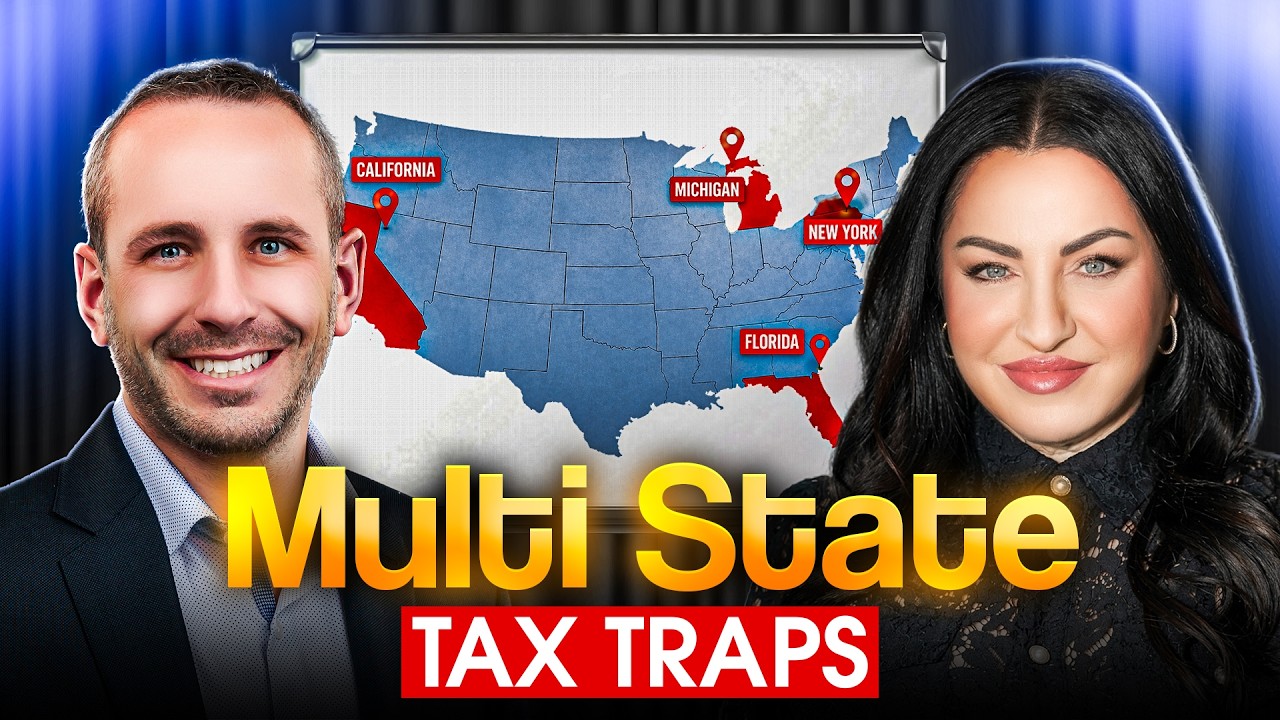
What Is State Tax Nexus? A Guide for Small Business Owners
Most small business owners assume they only have to worry about taxes in the state where their business is located.
But that is not always true.
If you hire a remote employee in another state, sell across state lines, or grow an online business, your business may create something called state tax nexus.
State tax nexus is the connection your business has to a state that creates a legal obligation to follow that state’s tax laws. Once nexus is triggered, that state may expect your business to register, file returns, collect sales tax, set up payroll tax accounts, or meet other compliance requirements.
The problem is that many business owners do not realize they have created nexus until they receive a notice, owe back taxes, or run into payroll and registration issues.
In this guide, we will break down what state tax nexus means, what commonly triggers it, how remote employees and out-of-state sales create tax obligations, and what small business owners need to do to stay compliant.
🚀 Need help registering in another state, setting up payroll tax accounts, or staying compliant as your business grows? Visit CorpNet here.
What Is State Tax Nexus?
State tax nexus means your business has enough connection to a state that the state can require you to comply with its tax laws.
That connection can come from physical activity, like having employees, property, or an office in the state. It can also come from economic activity, like selling enough products or services into that state.
In plain English, nexus answers this question:
Does your business have enough activity in this state for the state to require tax compliance?
If the answer is yes, the state may expect you to register and follow its rules. That could involve payroll tax, sales tax, income tax, unemployment insurance, or other state-specific filings.
The key point is this: you do not always need a physical location in a state to create tax obligations there.
The Two Main Types of State Tax Nexus
For most small business owners, there are two main types of state tax nexus to understand.
The first is employee nexus. This happens when your business has an employee working in another state.
The second is sales tax nexus, often called economic nexus. This happens when your business sells enough into another state to trigger that state’s tax requirements.
Both can create compliance issues, but they show up in different ways.
Employee nexus usually affects payroll registration, state withholding, and unemployment insurance. Sales tax nexus usually affects sales tax registration, collection, filing, and remittance.
How Remote Employees Can Create State Tax Nexus
Hiring a remote employee in another state can create nexus.
This surprises a lot of business owners because hiring remotely feels simple. If the job can be done from anywhere, the employee’s location may not seem like a major tax issue.
But from the state’s perspective, having an employee working there can mean your business is doing business in that state.
For example, say your business is based in Wisconsin, but you hire an employee who works from California. Even if you have no office in California, that one employee may create payroll tax obligations in California.
That could mean registering for state withholding, unemployment insurance, and other payroll-related accounts before you run payroll.
The takeaway is simple: do not avoid great remote talent because of state compliance, but do not ignore the setup either. Before you hire someone in another state, make sure you understand what registrations may be required.
Why Payroll Software Does Not Solve Everything
Payroll software can help you process payroll, calculate withholding, and file payroll returns. But it usually does not eliminate the need to register with the state first.
In many cases, your payroll provider will ask for state account numbers before payroll can be processed correctly. If you do not have those numbers, you may run into setup delays or payroll blockers.
This is where business owners get into trouble.
They hire the employee first, then realize they cannot run payroll properly because they never registered in that state. Or they enter the employee incorrectly and withhold taxes for the wrong state.
A practical example would be using your business address as the employee’s work location, even though the employee actually lives and works in another state. That can create incorrect withholding and a mess to clean up later.
The better approach is to pause before payroll starts and ask: do we need to register in this employee’s state?
How Out-of-State Sales Can Create Nexus
State tax nexus can also be created through sales.
This is called economic nexus. It is based on how much business you do in a state, not whether you are physically located there.
For example, your business may be based in Texas, but if you sell products or services to customers in another state, that state may require you to register and collect sales tax once you cross its threshold.
A common benchmark discussed in the episode is around $100,000 in sales or 200 transactions into a state annually, but this varies by state. Some states use different thresholds, and the details matter.
The main rule is not “one sale means you automatically have nexus everywhere.” The better rule is this: once your business starts making meaningful sales into another state, you need to track those sales and review the state’s requirements.
Why E-Commerce Businesses Need to Pay Attention
E-commerce businesses are especially exposed to state tax nexus issues because they can sell into many states quickly.
An online business may not think of itself as a multi-state business. But if customers from multiple states are buying from you, your business activity is already crossing state lines.
That does not always mean you need to register in every state immediately. But it does mean you need visibility.
You should know where your sales are coming from, how much revenue you are generating by state, and whether you are approaching state-specific thresholds.
One of the biggest mistakes online sellers make is assuming their platform handles everything. Some platforms may collect and remit sales tax in certain situations, but that does not mean every compliance responsibility disappears.
The takeaway: if your online sales are growing, track sales by state before the issue becomes a state notice.
Sales Tax Nexus vs. Payroll Tax Nexus
Sales tax nexus and payroll tax nexus are related, but they are not the same.
Sales tax nexus is usually tied to customers, sales volume, and transaction activity. If you cross a state’s sales threshold, you may need to register, collect sales tax, file returns, and remit the tax.
Payroll tax nexus is tied to employees. If you have an employee working in another state, you may need to register for payroll withholding, unemployment insurance, and related payroll accounts.
Payroll issues often show up faster because your payroll provider may flag missing information. Sales tax nexus can be easier to miss because you might keep selling into a state without realizing you crossed a threshold.
That is why sales tax nexus can feel more dangerous. There may not be a warning until the state contacts you, and by then, the issue may involve back taxes, penalties, and interest.
What Is Foreign Qualification?
Foreign qualification is another concept that comes up when your business expands into another state.
Despite the name, foreign qualification does not mean international. It means your LLC or corporation was formed in one state and is registering to do business in another state.
For example, if you formed your LLC in Wisconsin, Wisconsin is your domestic state. If that LLC needs to register to do business in California, that process is called foreign qualification.
Some states may require foreign qualification before you can set up payroll tax accounts or sales tax accounts. This is why a simple registration can sometimes turn into a multi-step process.
For example, you hire one employee in another state. You try to register for payroll accounts. Then the state asks whether your LLC is registered to do business there. If it is not, you may need to foreign qualify first.
The takeaway: when you expand into a new state, the order of filings matters.
What Happens If You Ignore State Tax Nexus?
Ignoring state tax nexus does not make it go away.
If your business has nexus in a state and does not register, file, collect, or remit taxes properly, that state may assess back taxes, penalties, and interest.
This is especially important with sales tax. If you were supposed to collect sales tax from customers but did not, the state may still expect payment. That can leave the business paying tax that should have been collected from the customer at the time of sale.
Payroll tax issues can also create problems. If you withhold taxes for the wrong state, fail to register, or miss required filings, you may need to correct payroll records and deal with state notices.
The main issue is not just the tax itself. It is the time, stress, and cleanup that come with fixing something after the fact.
Do Not Forget About Ongoing Compliance
Registering in a state is not the end of the process.
Once your business opens an account with a state, that state may expect ongoing filings. This can apply even if the amount due is zero.
For example, if you had an employee in Pennsylvania and later no longer have employees there, you may still need to close the account properly. If you do not, the state may keep sending notices because it still expects filings.
This is a common problem for business owners. They solve the immediate issue by registering, but they do not track what needs to happen next.
The better approach is to keep a simple compliance record. Know where you are registered, what filings are required, when they are due, and when accounts need to be closed.
How to Stay Compliant With State Tax Nexus Rules
The goal is not to panic every time your business grows into a new state. The goal is to know when to pause and review your obligations.
Start by identifying where your business has activity. Look at where your employees work, where your customers are located, where your sales are shipped, and where your business has property, inventory, or offices.
Next, determine whether that activity creates nexus. For employees, this usually means reviewing payroll registration requirements. For sales, this means reviewing state sales thresholds and sales tax rules.
Then, register in the right states when needed. That may include payroll accounts, unemployment insurance accounts, sales tax permits, foreign qualification, or other state-specific registrations.
Finally, maintain compliance. Filing requirements, renewal deadlines, account closures, and state notices all matter after registration.
When Should You Get Help?
You should consider getting help if you are hiring remote employees, selling across state lines, growing an e-commerce business, or receiving notices from another state.
You should also get help if you are unsure whether your business crossed a sales threshold or whether your services are taxable in another state.
A CPA can help you understand whether your business activity may create nexus and whether a deeper nexus review makes sense.
A filing and compliance partner can help with the registration side. This may include payroll tax accounts, sales tax accounts, foreign qualification, account closures, withdrawals, and ongoing compliance support.
This is also where CorpNet can be helpful. CorpNet assists business owners with state registrations, payroll tax accounts, sales tax registrations, foreign qualifications, account closures, and compliance filings across all 50 states.
Bottom Line: State Tax Nexus Starts With Business Growth
State tax nexus is not always created by a major mistake. Often, it starts with normal business growth.
You hire an employee in another state. You sell more products online. You build a customer base outside your home state.
Those are good things, but they can create new tax responsibilities.
The bottom line is this: know where your employees are, know where your sales are happening, and review your state tax obligations before a state contacts you.
If you are not sure where your business has nexus, start with your CPA or tax professional. It is much easier to fix these issues proactively than to wait for penalties, back taxes, and state notices.
Need help finding more ways to legally reduce your tax bill?
Get the Free Tax Savings Starter Kit Built for Small Business Owners:
https://www.taxsavingspodcast.com/starterkit
Ready for a proactive tax strategy? Book your free demo call today:
https://taxelm.com/demo/
Read the Full Episode Transcript
Full Episode Transcript
Episode: What Is State Tax Nexus? A Guide for Small Business Owners
Guest: Nellie Akalp, CEO and Co-Founder of CorpNet
Host: Mike Jesowshek, CPA
Topic: State tax nexus, remote employees, sales tax nexus, economic nexus, and multi-state compliance.
This transcript is provided for readers who want to follow the full conversation from the episode. It has been lightly edited for readability.
Introduction to State Tax Nexus
Mike Jesowshek: Most business owners think taxes are simple. You operate in one state, pay taxes in one state, and done.
But then you hire one remote employee, or you start selling in another state, and suddenly you have triggered something called nexus. Now, multiple states may want a piece of your income.
Miss this, and it is not a small mistake. It can mean penalties, back taxes, and a whole lot of stress.
Today, I brought on Nellie Akalp, CEO and Co-Founder of CorpNet, to break this down in plain English. We are talking about what creates nexus, where business owners get this wrong, and what to do if you have already crossed that line.
Nellie, as a returning guest, welcome back to the show.
Nellie Akalp: Thanks, Mike. Thank you for having me. I love this subject, and I am excited to be talking about it with you.
<!– What State Tax Nexus Means
Mike Jesowshek:
I think this is an important topic, especially as more businesses operate remotely and sell across the country.
Twenty years ago, working in multiple states was not as easy as it is now. Today, everyone is working in multiple states, hiring remotely, or selling across state lines.
A lot of business owners do not think about nexus. Or they assume that if they do not think about it, nothing will happen.
So let’s start with the basics. For someone hearing the term “state tax nexus” for the first time, what does it mean, and why does it matter?
Nellie Akalp:
State tax nexus is your business’s connection to a state that creates a legal obligation for your business to comply with that state’s tax laws.
There are two main types of nexus. You have sales nexus and employee nexus.
Either you are selling into a state, or you have people working as employees in that state. Once nexus is triggered, that state may expect you to register, collect, and file taxes.
If you do not register properly, even unintentionally, your business can be out of compliance. That can lead to penalties and back taxes.
Employee Nexus and Remote Employees
Mike Jesowshek:
Let’s start with the employee side.
When I was hiring early on, I had a completely remote business. Whether someone was next door or 500 miles away, it did not matter to me.
But then you start entering employees into payroll software, and suddenly you hit roadblocks.
I do not want people to be afraid of hiring out-of-state talent. But I do want them to understand what needs to be done.
How does an employee create nexus?
Nellie Akalp:
The moment a business has an employee working in another state, that state may consider you to be doing business there.
Now you may have payroll tax obligations, unemployment insurance obligations, and state registration requirements.
It does not matter if it is only one employee. One employee can be enough to trigger nexus.
If you are paying that employee through payroll, you generally need to register your business for payroll tax accounts in that state.
Payroll Registration Mistakes
Mike Jesowshek:
That makes sense.
The key is that business owners should not avoid hiring the best person just because they live in another state. But they should know what registrations are needed.
Once you have the right state account numbers, your payroll software can usually help handle the filings.
Nellie Akalp:
Exactly. And if you are doing payroll by hand, that is even more reason to work with a payroll provider or partner.
Payroll tax laws change often, and you want to stay on top of the requirements.
Before you run payroll, you should get your payroll tax accounts set up properly.
Common Employee Nexus Mistakes
Mike Jesowshek:
What are the most common mistakes you see business owners make with employee nexus?
Nellie Akalp:
The biggest mistake is not knowing nexus exists.
A business owner thinks, “It is only one remote employee.” But from a compliance standpoint, that can be enough to create nexus.
Another mistake is running payroll without properly registering in that state first.
And then business owners forget about ongoing filings. They may set up the account, but they do not maintain it. That is where issues start to snowball.
Economic Nexus and Out-of-State Sales
Mike Jesowshek:
Now let’s talk about the sales side, because this is where there can be more confusion.
What does nexus mean from a sales standpoint?
Nellie Akalp:
We refer to that as economic nexus.
Economic nexus is based on how much you sell into a state, not whether you are physically located there.
Even without employees or an office, you can still trigger economic nexus by hitting certain sales thresholds.
This changed after the South Dakota v. Wayfair case, which allowed states to tax out-of-state sellers based on economic activity within the state.
Sales Thresholds
Mike Jesowshek:
So if a business is in Texas and provides remote accounting services to a company in California, could that create nexus?
Nellie Akalp:
It depends on the state and the type of service.
A good general benchmark is around $100,000 in sales or 200 transactions into a state annually, but it is state dependent.
That is not exact for every state, but it is a strong benchmark to watch when you are thinking about economic nexus.
Mike Jesowshek:
That is helpful because one small sale into another state may not necessarily trigger nexus.
But once you start making meaningful sales into a state, it is time to review your exposure.
E-Commerce and Multi-State Sales
Mike Jesowshek:
What are the biggest blind spots for e-commerce sellers and online businesses?
Nellie Akalp:
The biggest blind spot is thinking, “I am online, so I do not have anything to worry about.”
E-commerce businesses are often the most exposed because they are selling everywhere.
Another blind spot is relying on platforms and assuming everything is handled. In reality, you are still responsible for your compliance.
Most businesses are not tracking their sales state by state closely enough.
Foreign Qualification
Nellie Akalp:
Another thing business owners need to understand is foreign qualification.
If you are running your business as an LLC or corporation, some states may require you to foreign qualify before registering for payroll tax accounts or sales tax accounts.
Foreign qualification means taking the corporation or LLC you created in your home state and qualifying it to do business in another state.
Mike Jesowshek:
That is something I have seen business owners run into.
They try to get a state tax number, and the form asks for their registration with the state. But the business is not registered there yet. So now they have to foreign qualify first, then come back to complete the tax account registration.
Closing State Accounts
Mike Jesowshek:
Another issue I have seen is when a business had an employee in a state years ago, the employee left, but the state account was never closed.
Then years later, the business is still getting notices for overdue filings.
Nellie Akalp:
That is an important point.
If you end activity in a state, close down operations, terminate an employee, or move from one state to another, you cannot just let those accounts stay open.
Even if you are running zero payroll, you may still receive notices or filing requirements.
You need to close the accounts properly and withdraw from the state when required.
What Happens If You Ignore Nexus?
Mike Jesowshek:
What happens if a business owner has sales tax nexus in a state but does not do anything about it?
Nellie Akalp:
Eventually, it can catch up to you.
States may assess back taxes, penalties, and interest, sometimes going back years.
With sales tax, it can be especially serious because you are collecting tax from customers. If you were supposed to collect sales tax and did not, the state may still expect payment.
That is why business owners need to be more vigilant when they have sales tax activity or economic activity in another state.
How to Stay Proactive
Mike Jesowshek:
As we wrap up, what should business owners do if they think they may have nexus?
Nellie Akalp:
First, do not panic. These issues are fixable.
Step one is identifying where you have nexus, whether from employees or sales.
Step two is getting properly registered before you start collecting taxes or running payroll.
Step three is putting a system in place to stay compliant and in good standing.
The key is visibility. Know where your employees are and where your sales are happening.
Any time you hire or grow in a new state, pause and ask, “Are we creating nexus in that state?”
Final Thoughts
Mike Jesowshek:
That is the big takeaway.
State tax nexus is one of those things business owners often do not think about until it is too late.
The businesses that stay ahead of it understand where they are operating, where they are exposed, and what needs to be handled before a state comes knocking.
If you want help from our team of tax professionals implementing strategies like this and legally lowering your tax bill, visit TaxElm.com or click the link in the description for a free discovery call.
Nellie, thanks for coming back on the show.
Nellie Akalp:
Thank you so much for having me. It has been a pleasure.
If anyone has questions, they can visit CorpNet.com. They can also email me directly at Nellie@Akalp.com.